Semester 2 - Islamstudium

- Beschreibung
- Lehrplan
- Bewertungen
- Grade
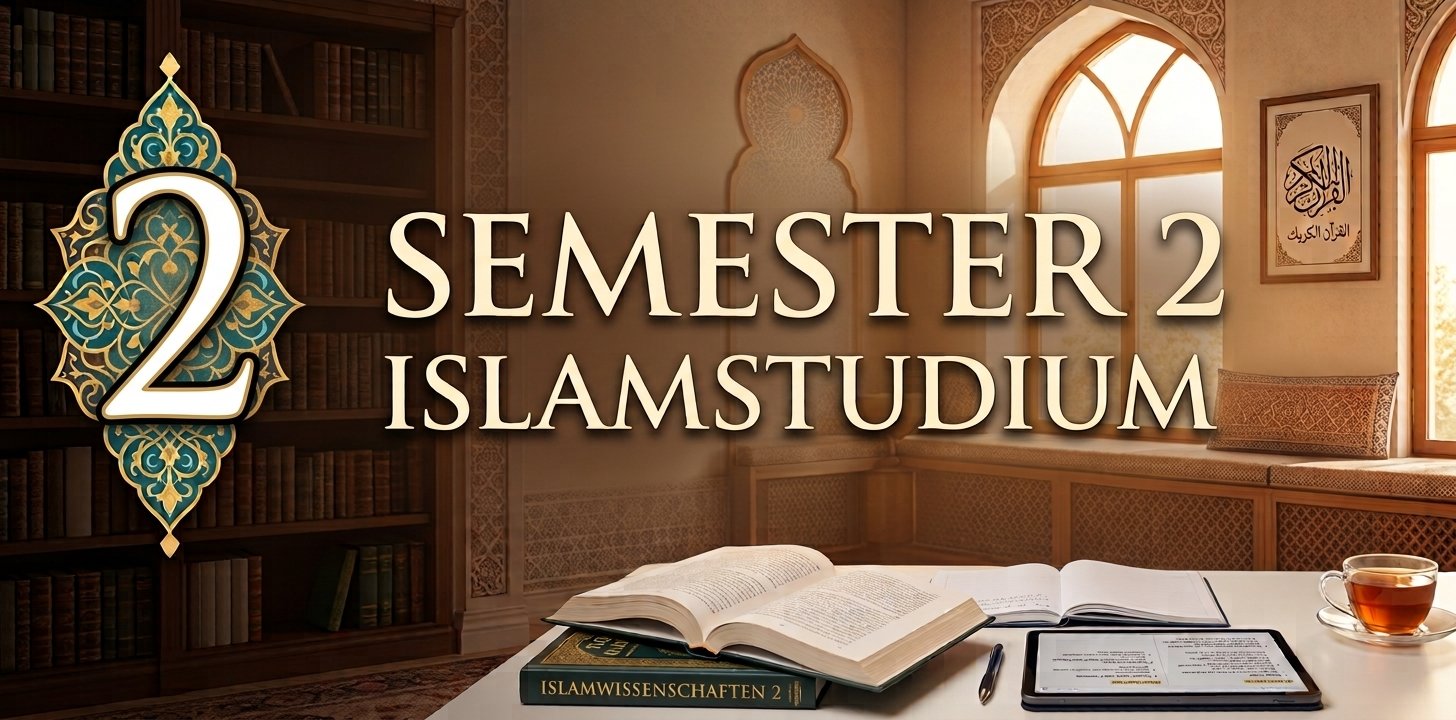
Semesterbeschreibung
Dieses Semester vertieft das methodische Verständnis der islamischen Wissenschaften und erweitert die Perspektive von den Grundlagen hin zu nachvollziehbarer Begründung, der Einordnung unterschiedlicher Meinungen und textbasierter Analyse. Im Mittelpunkt stehen der Manhaj (methodisches Vorgehen in der Rechtsfindung), die beweisgestützte Argumentation sowie der verantwortungsvolle Umgang mit Qurʾān, Sunna und den Aussagen der Gelehrten.
Die vier Module behandeln die Ursachen legitimer Rechtsunterschiede, festigen die Methodik der Rechtsableitung, vermitteln einen ganzheitlichen Zugang zum Manhaj der Salaf auf der Grundlage authentischer Hadithe und geben eine Einführung in die klassische Qurʾān-Exegese. Ziel ist es, die Studierenden zu befähigen, Rechtsurteile, Texte und Positionen fundiert einzuordnen und ein reiferes Verständnis für die Vielfalt innerhalb der sunnitischen Tradition zu entwickeln.
Modulübersicht
1) Manhaj der Gelehrten bei Meinungsverschiedenheiten
Aufbauend auf den Ausführungen Ibn Taymiyyas zu den Ursachen von Rechtsunterschieden unter den Gelehrten behandelt dieses Modul die legitimen Gründe für unterschiedliche Fatwas, darunter: unterschiedlicher Kenntnisstand über Hadithe, Bewertung ihrer Authentizität, verschiedene Textinterpretationen, Fragen des Naskh (Abrogation) sowie Probleme der Anwendung.
Das Modul fördert den Respekt gegenüber den Gelehrten, methodische Fairness und ein differenziertes Verständnis von Ikhtilāf (Meinungsverschiedenheit).
2) Uṣūl al-Fiqh – Modul 2 (Ṣafwat Uṣūl al-Fiqh)
Vertiefte دراسة der Rechtsmethodik nach Shaykh ʿAbd ar-Raḥmān as-Saʿdī. Inhalte sind unter anderem: Zielsetzung der Uṣūl, Rechtsquellen (Qurʾān, Sunna, Iǧmāʿ, Qiyās), Befehle und Verbote, allgemein und speziell, absolut und bedingt, Regeln der Ableitung, Umgang mit scheinbaren Widersprüchen sowie die Bedeutung der Uṣūl für Fiqh und Iǧtihād.
3) Manhaj der Salaf – Hadithbasierter Ansatz
Studium einer Sammlung von 99 Hadithen, die zentrale Prinzipien des Glaubens, der Methodik, der Haltung und der Praxis vermitteln. Behandelt werden unter anderem: Grundlagen der ʿAqīda, der Umgang mit Qurʾān und Sunna, Wissen und Aufrichtigkeit, Warnungen vor Bidʿa (Neuerungen), der Umgang mit Fitna (Prüfungen) sowie die Verbindung von Glauben und Charakter.
Das Modul präsentiert den Islam als gelebtes, textbasiertes und ganzheitliches Konzept.
4) Tafsīr – Modul 1 (Tafsīr Ibn ʿUthaymīn)
Einführung in die sunnitische Qurʾān-Exegese auf Grundlage des Tafsīr-Werks von Shaykh Muḥammad ibn ʿAlī al-ʿUthaymīn. Das Modul bietet eine klare, strukturierte Erklärung der Verse, ihre Kontextualisierung, sprachliche Erläuterungen sowie die Ableitung von Glaubens- und Praxislehren aus Qurʾān und Sunna.
Ziel ist ein verständliches, textbasiertes und praxisorientiertes Verständnis des Qurʾān ohne spekulative Auslegungen.
Lernziele nach dem Semester
-
Verständnis legitimer Meinungsverschiedenheiten und ihrer methodischen Ursachen
-
Sicherer Umgang mit den Grundlagen der Rechtsmethodik und Rechtsableitung
-
Ganzheitliches Verständnis des Manhaj der Salaf in Glauben, Haltung und Praxis
-
Grundlegende Fähigkeit zur methodischen Einordnung klassischer Tafsīr-Werke
Teilnahme & Abschluss
Buchung: als komplettes Semester (empfohlen) oder als einzelne Module. Hinweis zu Prüfungen & Zertifikaten: Prüfungen und Zertifikate werden ausschließlich für den vollständigen Studiengang vergeben; einzelne Module oder ein einzelnes Semester beinhalten diese nicht.
-
1
 Lektion 01 - Die Bedeutung der Loyalität gegenüber unseren Gelehrten
 -
2
 - Zwischentest - 01/Fiqh 2Nutze diesen Zwischentest, um dein aktuelles Wissen zu festigen und dich Schritt für Schritt auf die Prüfung vorzubereiten.
 -
3
Lektion 02 - Die drei Haupt-Entschuldigungsgründe für Meinungsverschiedenheiten unter Gelehrten
-
4
- Zwischentest - 02/Fiqh 2Nutze diesen Zwischentest, um dein aktuelles Wissen zu festigen und dich Schritt für Schritt auf die Prüfung vorzubereiten.
-
5
Lektion 03 - Der erste große Entschuldigungsgrund: Der Hadith hat den Gelehrten nicht erreicht
-
6
- Zwischentest - 03/Fiqh 2Nutze diesen Zwischentest, um dein aktuelles Wissen zu festigen und dich Schritt für Schritt auf die Prüfung vorzubereiten.
-
7
Lektion 04 - Auch Abu Bakr und Umar kannten nicht alle Ahadith
-
8
- Zwischentest - 04/Fiqh 2Nutze diesen Zwischentest, um dein aktuelles Wissen zu festigen und dich Schritt für Schritt auf die Prüfung vorzubereiten.
-
9
Lektion 05 - Umar ibn al-Khattab und seine fehlenden Hadith-Kenntnisse – Weitere Beispiele
-
10
- Zwischentest - 05/Fiqh 2Nutze diesen Zwischentest, um dein aktuelles Wissen zu festigen und dich Schritt für Schritt auf die Prüfung vorzubereiten.
-
11
Lektion 06 - Hadith-Wissen von Uthman ibn Affan – Was er nicht wusste
-
12
- Zwischentest - 06/Fiqh 2Nutze diesen Zwischentest, um dein aktuelles Wissen zu festigen und dich Schritt für Schritt auf die Prüfung vorzubereiten.
-
13
Lektion 07 - Hadith-Wissen von Ali ibn Abi Talib – Was er nicht wusste
-
14
- Zwischentest - 07/Fiqh 2Nutze diesen Zwischentest, um dein aktuelles Wissen zu festigen und dich Schritt für Schritt auf die Prüfung vorzubereiten.
-
15
Lektion 08 - Kein Gelehrter kennt alle Ahadith – Ein universelles Prinzip
-
16
- Zwischentest - 08/Fiqh 2Nutze diesen Zwischentest, um dein aktuelles Wissen zu festigen und dich Schritt für Schritt auf die Prüfung vorzubereiten.
-
17
Lektion 09 - Kann man Mujtahid sein, ohne alle Ahadith zu kennen?
-
18
- Zwischentest - 09/Fiqh 2Nutze diesen Zwischentest, um dein aktuelles Wissen zu festigen und dich Schritt für Schritt auf die Prüfung vorzubereiten.
-
19
Lektion 10 - Zweiter Entschuldigungsgrund (wenn der Hadith den Gelehrten erreicht, diesen aber nicht für authentisch sieht)
-
20
- Zwischentest - 10/Fiqh 2Nutze diesen Zwischentest, um dein aktuelles Wissen zu festigen und dich Schritt für Schritt auf die Prüfung vorzubereiten.
-
21
Lektion 11 - Dritter Entschuldigungsgrund (zu verinnerlichen, dass der Hadith schwach ist durch ijtihad, womit andere Gelehrte nicht einverstanden sind)
-
22
- Zwischentest - 11/Fiqh 2Nutze diesen Zwischentest, um dein aktuelles Wissen zu festigen und dich Schritt für Schritt auf die Prüfung vorzubereiten.
-
23
Lektion 12 - Vierter Entschuldigungsgrund (Der Gelehrte stellt Bedingungen auf in Bezug auf einen Tradenten, womit andere Gelehrten nicht einverstanden sind)
-
24
- Zwischentest - 12/Fiqh 2Nutze diesen Zwischentest, um dein aktuelles Wissen zu festigen und dich Schritt für Schritt auf die Prüfung vorzubereiten.
-
25
Lektion 13 - Fünfter Entschuldigungsgrund (Der Hadith erreicht den Gelehrten und ist bei ihm auch authentisch, aber er vergisst ihn)
-
26
- Zwischentest - 13/Fiqh 2Nutze diesen Zwischentest, um dein aktuelles Wissen zu festigen und dich Schritt für Schritt auf die Prüfung vorzubereiten.
-
27
Lektion 14 - Sechster Entschuldigungsgrund (unterschiedliche Probleme mit dem Verständnis)
-
28
- Zwischentest - 14/Fiqh 2Nutze diesen Zwischentest, um dein aktuelles Wissen zu festigen und dich Schritt für Schritt auf die Prüfung vorzubereiten.
-
29
Lektion 15 - Siebter Entschuldigungsgrund
-
30
- Zwischentest - 15/Fiqh 2Nutze diesen Zwischentest, um dein aktuelles Wissen zu festigen und dich Schritt für Schritt auf die Prüfung vorzubereiten.
-
31
Lektion 16 - Achter Entschuldigungsgrund
-
32
- Zwischentest - 16/Fiqh 2Nutze diesen Zwischentest, um dein aktuelles Wissen zu festigen und dich Schritt für Schritt auf die Prüfung vorzubereiten.
-
33
Lektion 17 - Neunter Entschuldigungsgrund
-
34
- Zwischentest - 17/Fiqh 2Nutze diesen Zwischentest, um dein aktuelles Wissen zu festigen und dich Schritt für Schritt auf die Prüfung vorzubereiten.
-
35
Lektion 18 - Zehnter Entschuldigungsgrund
-
36
- Zwischentest - 18/Fiqh 2Nutze diesen Zwischentest, um dein aktuelles Wissen zu festigen und dich Schritt für Schritt auf die Prüfung vorzubereiten.
-
37
ZWISCHENPRÜFUNG ZUM: MODUL - FIQH 2Festige dein Wissen und bereite dich mit diesen Fragen optimal auf deinen Abschluss in Fiqh 2 vor.
-
38
Lektion 01 - Al - ´Aziemah - Die Bestimmung und Ar-Ruchsah - Die Erlaubnis
-
39
Lektion 02 - Grob über Vergesslichkeit - Fehler - Zwang
-
40
Lektion 03 - Detailliert über die Vergesslichkeit
-
41
Lektion 04 - Detailliert über den Fehler
-
42
Lektion 05 - Detailliert über den Zwang und seine Arten
-
43
Lektion 06 - Die Sunnah ist die zweite Beweisquelle nach dem Quran
-
44
Lektion 07 - Der Konsens ist die dritte Beweisquelle
-
45
Lektion 08 - Mutawatir und Aahaad Überlieferungen
-
46
Lektion 09 - Sind die Aussagen der Sahaba eine Beweisquelle?
-
47
Lektion 10 - Gebot beinhaltet Verbot und Verbot beinhaltet Gebot
-
48
Lektion 11 - Das Verbot beinhaltet gleichzeitig die Ungültigkeit
-
49
Lektion 12 - Ausdrücke die auf Allgemeinheit hinweisen
-
50
Lektion 13 - Fortsetzung Ausdrücke die auf Allgemeinheit hinweisen - Teil 1
-
51
Lektion 14 - Fortsetzung Ausdrücke die auf Allgemeinheit hinweisen - Teil 2
-
52
Lektion 15 - Die Spezifizierung eines allgemeinen Textes
-
53
Lektion 16 - Ausnahme bei eingeschränkten und uneingeschränkten Aussagen
-
54
Lektion 17 - Unverdeutlichte und verdeutlichte Aussagen
-
55
Lektion 18 - Die Regel der mehrdeutigen und eindeutigen Verse
-
56
Lektion 19 - Wann darf man deutliche Aussagen umdeuten?
-
57
Lektion 20 - Mantuq und Mafhum
-
58
Lektion 21 - Mantuq und Mafhum Fortsetzung
-
59
Lektion 22 - Grob über die Abrogation
-
60
Lektion 23 - Grob über Analogieschluss
-
61
ZWISCHENPRÜFUNG ZUM: MODUL - USUL FIQH 2Festige dein Wissen und bereite dich mit diesen Fragen optimal auf deinen Abschluss in Usul-Fiqh 2 vor.
-
62
- Was erwartet mich in diesem Kurs?
-
63
- Der Titel des Buches
-
64
- Zwischentest - /Hadith 1Nutze diesen Zwischentest, um dein aktuelles Wissen zu festigen und dich Schritt für Schritt auf die Prüfung vorzubereiten.
-
65
- Die Biografie von Imam As - Sa´dy
-
66
- Zwischentest - /Hadith 1Nutze diesen Zwischentest, um dein aktuelles Wissen zu festigen und dich Schritt für Schritt auf die Prüfung vorzubereiten.
-
67
- Die interessante Einleitungsrede von Imam As - Sa´dy
-
68
- Zwischentest - 00 /Hadith 1Nutze diesen Zwischentest, um dein aktuelles Wissen zu festigen und dich Schritt für Schritt auf die Prüfung vorzubereiten.
-
69
Lektion 01 - Hadith Nr.1 - Absicht und Aufrichtigkeit - Teil 1
-
70
- Zwischentest - 01 /Hadith 1Nutze diesen Zwischentest, um dein aktuelles Wissen zu festigen und dich Schritt für Schritt auf die Prüfung vorzubereiten.
-
71
Lektion 02 - Hadith Nr.1 - Absicht und Aufrichtigkeit - Teil 2
-
72
- Zwischentest - 02 /Hadith 1Nutze diesen Zwischentest, um dein aktuelles Wissen zu festigen und dich Schritt für Schritt auf die Prüfung vorzubereiten.
-
73
Lektion 03 - Hadith Nr.2 - Die Warnung vor Erneuerungen
-
74
- Zwischentest - 03 /Hadith 1Nutze diesen Zwischentest, um dein aktuelles Wissen zu festigen und dich Schritt für Schritt auf die Prüfung vorzubereiten.
-
75
Lektion 04 - Hadith Nr.3 - Die Loyalität zur Religion
-
76
- Zwischentest - 04 /Hadith 1Nutze diesen Zwischentest, um dein aktuelles Wissen zu festigen und dich Schritt für Schritt auf die Prüfung vorzubereiten.
-
77
Lektion 05 - Hadith Nr.4 - Eigenschaften der Paradiesbewohner
-
78
- Zwischentest 05 /Hadith 1Nutze diesen Zwischentest, um dein aktuelles Wissen zu festigen und dich Schritt für Schritt auf die Prüfung vorzubereiten.
-
79
Lektion 06 - Hadith Nr.5 - Die Standhaftigkeit
-
80
- Zwischentest - 06 /Hadith 1Nutze diesen Zwischentest, um dein aktuelles Wissen zu festigen und dich Schritt für Schritt auf die Prüfung vorzubereiten.
-
81
Lektion 07 - Hadith Nr.6 - Die Eigenschaft des wahren Muslims
-
82
- Zwischentest - 07 /Hadith 1Nutze diesen Zwischentest, um dein aktuelles Wissen zu festigen und dich Schritt für Schritt auf die Prüfung vorzubereiten.
-
83
Lektion 08 - Hadith Nr. 7 - Die Eigenschaften des Heuchlers
-
84
- Zwischentest - 08 /Hadith 1Nutze diesen Zwischentest, um dein aktuelles Wissen zu festigen und dich Schritt für Schritt auf die Prüfung vorzubereiten.
-
85
Lektion 09 - Hadith Nr. 8 - Die Behandlung von Einflüsterungen im Glauben
-
86
- Zwischentest - 09 /Hadith 1Nutze diesen Zwischentest, um dein aktuelles Wissen zu festigen und dich Schritt für Schritt auf die Prüfung vorzubereiten.
-
87
Lektion 10 - Hadith Nr.9 - Der Glaube an die Vorherbestimmung
-
88
- Zwischentest - 10 /Hadith 1Nutze diesen Zwischentest, um dein aktuelles Wissen zu festigen und dich Schritt für Schritt auf die Prüfung vorzubereiten.
-
89
Lektion 11 - Hadith Nr.10 - Der Aufruf zur Rechtleitung
-
90
- Zwischentest - 11 /Hadith 1Nutze diesen Zwischentest, um dein aktuelles Wissen zu festigen und dich Schritt für Schritt auf die Prüfung vorzubereiten.
-
91
Lektion 12 - Hadith Nr.11 - Wissen über die Religion
-
92
- Zwischentest - 12 /Hadith 1Nutze diesen Zwischentest, um dein aktuelles Wissen zu festigen und dich Schritt für Schritt auf die Prüfung vorzubereiten.
-
93
Lektion 13 - Hadith Nr.12 - Der starke und schwache Gläubige - Teil 1
-
94
- Zwischentest - 13 /Hadith 1Nutze diesen Zwischentest, um dein aktuelles Wissen zu festigen und dich Schritt für Schritt auf die Prüfung vorzubereiten.
-
95
Lektion 14 - Hadith Nr.12 - Der starke und schwache Gläubige - Teil 2
-
96
- Zwischentest - 14 /Hadith 1Nutze diesen Zwischentest, um dein aktuelles Wissen zu festigen und dich Schritt für Schritt auf die Prüfung vorzubereiten.
-
97
Lektion 15 - Hadith Nr.12 - Der starke und schwache Gläubige - Teil 3
-
98
- Zwischentest - 15 /Hadith 1Nutze diesen Zwischentest, um dein aktuelles Wissen zu festigen und dich Schritt für Schritt auf die Prüfung vorzubereiten.
-
99
Lektion 16 - Hadith Nr.13 - Der Gläubige ist für den anderen Gläubigen wie ein Bauwerk
-
100
- Zwischentest - 16 /Hadith 1Nutze diesen Zwischentest, um dein aktuelles Wissen zu festigen und dich Schritt für Schritt auf die Prüfung vorzubereiten.
-
101
Lektion 17 - Hadith Nr.14 - Das Wirken als Vermittler des Guten unter den Menschen
-
102
- Zwischentest - 17 /Hadith 1Nutze diesen Zwischentest, um dein aktuelles Wissen zu festigen und dich Schritt für Schritt auf die Prüfung vorzubereiten.
-
103
Lektion 18 - Hadith Nr.15 - Behandelt die Menschen entsprechend ihrem Rang - Teil 1
-
104
- Zwischentest - 18 /Hadith 1Nutze diesen Zwischentest, um dein aktuelles Wissen zu festigen und dich Schritt für Schritt auf die Prüfung vorzubereiten.
-
105
Lektion 19 - Hadith Nr.15 - Behandelt die Menschen entsprechend ihrem Rang - Teil 2
-
106
- Zwischentest - 19 /Hadith 1Nutze diesen Zwischentest, um dein aktuelles Wissen zu festigen und dich Schritt für Schritt auf die Prüfung vorzubereiten.
-
107
Lektion 20 - Hadith Nr.16 - Die Belohnung entspricht der Art der Tat - Teil 1
-
108
- Zwischentest - 20 /Hadith 1Nutze diesen Zwischentest, um dein aktuelles Wissen zu festigen und dich Schritt für Schritt auf die Prüfung vorzubereiten.
-
109
Lektion 21 - Hadith Nr.16 - Die Belohnung entspricht der Art der Tat - Teil 2
-
110
- Zwischentest - 21 /Hadith 1Nutze diesen Zwischentest, um dein aktuelles Wissen zu festigen und dich Schritt für Schritt auf die Prüfung vorzubereiten.
-
111
Lektion 22 - Hadith Nr.17 - Die Gottesfurcht
-
112
- Zwischentest - 22 /Hadith 1Nutze diesen Zwischentest, um dein aktuelles Wissen zu festigen und dich Schritt für Schritt auf die Prüfung vorzubereiten.
-
113
Lektion 23 - Hadith Nr.18 - Die Ungerechtigkeit ist Finsternis
-
114
- Zwischentest - 23 /Hadith 1Nutze diesen Zwischentest, um dein aktuelles Wissen zu festigen und dich Schritt für Schritt auf die Prüfung vorzubereiten.
-
115
Lektion 24 - Hadith Nr.19 - Dankbarkeit für die Gnaden Allahs
-
116
- Zwischentest - 24 /Hadith 1Nutze diesen Zwischentest, um dein aktuelles Wissen zu festigen und dich Schritt für Schritt auf die Prüfung vorzubereiten.
-
117
Lektion 25 - Hadith Nr.20 - Die Bedingung für die Gültigkeit des Gebets (FORTSETZUNG IN DEN NÄCHSTEN SEMESTERN)
-
118
- Zwischentest - 25 /Hadith 1Nutze diesen Zwischentest, um dein aktuelles Wissen zu festigen und dich Schritt für Schritt auf die Prüfung vorzubereiten.
-
119
ZWISCHENPRÜFUNG ZUM: MODUL - HADITH 1Festige dein Wissen und bereite dich mit diesen Fragen optimal auf deinen Abschluss in Hadith 1 vor.
-
120
- Was erwartet mich in diesem Kurs?
-
121
- Zwischentest - /Tafsir 1Nutze diesen Zwischentest, um dein aktuelles Wissen zu festigen und dich Schritt für Schritt auf die Prüfung vorzubereiten.
-
122
- Der Titel des Buches
-
123
- Zwischentest - /Tafsir 1Nutze diesen Zwischentest, um dein aktuelles Wissen zu festigen und dich Schritt für Schritt auf die Prüfung vorzubereiten.
-
124
- Die Biografie des Autors -ibn ´´Uthaimeen - Teil 1
-
125
- Die Biografie des Autors -ibn ´´Uthaimeen - Teil 2
-
126
- Ibn Uthaimeen´s wegweisendes Vorwort
-
127
- Zwischentest - 00 /Tafsir 1Nutze diesen Zwischentest, um dein aktuelles Wissen zu festigen und dich Schritt für Schritt auf die Prüfung vorzubereiten.
-
128
Lektion 01 - Der edle Koran
-
129
- Zwischentest -01 /Tafsir 1Nutze diesen Zwischentest, um dein aktuelles Wissen zu festigen und dich Schritt für Schritt auf die Prüfung vorzubereiten.
-
130
Lektion 02 - Die Herabsendung des Korans
-
131
- Zwischentest - 02 /Tafsir 1Nutze diesen Zwischentest, um dein aktuelles Wissen zu festigen und dich Schritt für Schritt auf die Prüfung vorzubereiten.
-
132
Lektion 03 - Das erste was vom Koran offenbart wurde
-
133
- Zwischentest - 03 /Tafsir 1Nutze diesen Zwischentest, um dein aktuelles Wissen zu festigen und dich Schritt für Schritt auf die Prüfung vorzubereiten.
-
134
Lektion 04 - Der Koran kam herab aufgrund von Anlässen und ohne Anlässe
-
135
- Zwischentest - 04 /Tafsir 1Nutze diesen Zwischentest, um dein aktuelles Wissen zu festigen und dich Schritt für Schritt auf die Prüfung vorzubereiten.
-
136
Lektion 05 - Die Vorzüge der Kenntnis der Offenbarungsanlässe
-
137
- Zwischentest - 05 /Tafsir 1Nutze diesen Zwischentest, um dein aktuelles Wissen zu festigen und dich Schritt für Schritt auf die Prüfung vorzubereiten.
-
138
Lektion 06 - Eine wichtige Tafsir - Regel
-
139
- Zwischentest - 06 /Tafsir 1Nutze diesen Zwischentest, um dein aktuelles Wissen zu festigen und dich Schritt für Schritt auf die Prüfung vorzubereiten.
-
140
Lektion 07 - Mekkanischer und Medinensischer Koran
-
141
- Zwischentest - 07 /Tafsir 1Nutze diesen Zwischentest, um dein aktuelles Wissen zu festigen und dich Schritt für Schritt auf die Prüfung vorzubereiten.
-
142
Lektion 08 - Der Nutzen der Kenntnis über das Mekkanische und Medinensische
-
143
- Zwischentest - 08 /Tafsir 1Nutze diesen Zwischentest, um dein aktuelles Wissen zu festigen und dich Schritt für Schritt auf die Prüfung vorzubereiten.
-
144
Lektion 09 - Die Weisheit hinter der schrittweisen Offenbarung
-
145
- Zwischentest - 09 /Tafsir 1Nutze diesen Zwischentest, um dein aktuelles Wissen zu festigen und dich Schritt für Schritt auf die Prüfung vorzubereiten.
-
146
Lektion 10 - Die Reihenfolge des Korans
-
147
- Zwischentest - 10 /Tafsir 1Nutze diesen Zwischentest, um dein aktuelles Wissen zu festigen und dich Schritt für Schritt auf die Prüfung vorzubereiten.
-
148
Lektion 11 - Das Niederschreiben und Sammeln des Korans
-
149
- Zwischentest - 11 /Tafsir 1Nutze diesen Zwischentest, um dein aktuelles Wissen zu festigen und dich Schritt für Schritt auf die Prüfung vorzubereiten.
-
150
Lektion 12 - Die Exegese - At-Tafsir
-
151
- Zwischentest - 12 /Tafsir 1Nutze diesen Zwischentest, um dein aktuelles Wissen zu festigen und dich Schritt für Schritt auf die Prüfung vorzubereiten.
-
152
Lektion 13 - Die Pflicht bei der Erklärung des Korans
-
153
- Zwischentest - 13 /Tafsir 1Nutze diesen Zwischentest, um dein aktuelles Wissen zu festigen und dich Schritt für Schritt auf die Prüfung vorzubereiten.
-
154
Lektion 14 - Die 5 Bezugsquellen für den Tafsir
-
155
- Zwischentest - 14 /Tafsir 1Nutze diesen Zwischentest, um dein aktuelles Wissen zu festigen und dich Schritt für Schritt auf die Prüfung vorzubereiten.
-
156
Lektion 15 - Die vorkommenden Meinungsverschiedenheiten im Tafsir
-
157
- Zwischentest - 15 /Tafsir 1Nutze diesen Zwischentest, um dein aktuelles Wissen zu festigen und dich Schritt für Schritt auf die Prüfung vorzubereiten.
-
158
Lektion 16 - Die Übersetzung des Korans
-
159
- Zwischentest - 16 /Tafsir 1Nutze diesen Zwischentest, um dein aktuelles Wissen zu festigen und dich Schritt für Schritt auf die Prüfung vorzubereiten.
-
160
Lektion 17 - Das Urteil über das Übersetzen des Korans
-
161
- Zwischentest - 17 /Tafsir 1Nutze diesen Zwischentest, um dein aktuelles Wissen zu festigen und dich Schritt für Schritt auf die Prüfung vorzubereiten.
-
162
Lektion 18 - Die bekannten Gefährten, Sahaba des Tafsir
-
163
- Zwischentest - 18 /Tafsir 1Nutze diesen Zwischentest, um dein aktuelles Wissen zu festigen und dich Schritt für Schritt auf die Prüfung vorzubereiten.
-
164
Lektion 19 - Ali ibn Abi Talib
-
165
- Zwischentest -19 /Tafsir 1Nutze diesen Zwischentest, um dein aktuelles Wissen zu festigen und dich Schritt für Schritt auf die Prüfung vorzubereiten.
-
166
Lektion 20 - Abdullah ibn Mas´ud
-
167
- Zwischentest - 20 /Tafsir 1Nutze diesen Zwischentest, um dein aktuelles Wissen zu festigen und dich Schritt für Schritt auf die Prüfung vorzubereiten.
-
168
Lektion 21 - Abdullah ibn ´Abbas
-
169
- Zwischentest - 21 /Tafsir 1Nutze diesen Zwischentest, um dein aktuelles Wissen zu festigen und dich Schritt für Schritt auf die Prüfung vorzubereiten.
-
170
Lektion 22 - Die bekannten Tabi´ien (Schüler der Sahaba) des Tafsir
-
171
- Zwischentest - 22 /Tafsir 1Nutze diesen Zwischentest, um dein aktuelles Wissen zu festigen und dich Schritt für Schritt auf die Prüfung vorzubereiten.
-
172
Lektion 23 - Mujahid ibn Jabr
-
173
- Zwischentest - 23 /Tafsir 1Nutze diesen Zwischentest, um dein aktuelles Wissen zu festigen und dich Schritt für Schritt auf die Prüfung vorzubereiten.
-
174
Lektion 24 - Qatadah ibn Di´amah
-
175
- Zwischentest - 24 /Tafsir 1Nutze diesen Zwischentest, um dein aktuelles Wissen zu festigen und dich Schritt für Schritt auf die Prüfung vorzubereiten.
-
176
Lektion 25 - Eindeutigkeit und Mehrdeutigkeit im Koran
-
177
- Zwischentest - 25 /Tafsir 1Nutze diesen Zwischentest, um dein aktuelles Wissen zu festigen und dich Schritt für Schritt auf die Prüfung vorzubereiten.
-
178
Lektion 26 - Die Haltung der Festverwurzelten im Wissen und der Abweichenden gegenüber der Mehrdeutigkeit
-
179
- Zwischentest - 26 /Tafsir 1Nutze diesen Zwischentest, um dein aktuelles Wissen zu festigen und dich Schritt für Schritt auf die Prüfung vorzubereiten.
-
180
Lektion 27 - Arten der Unklarheit; (Ähnlichkeit) im Koran
-
181
- Zwischentest - 27 /Tafsir 1Nutze diesen Zwischentest, um dein aktuelles Wissen zu festigen und dich Schritt für Schritt auf die Prüfung vorzubereiten.
-
182
Lektion 28 - Die Weisheit warum Mehrdeutigkeit und Eindeutigkeit
-
183
- Zwischentest - 28 /Tafsir 1Nutze diesen Zwischentest, um dein aktuelles Wissen zu festigen und dich Schritt für Schritt auf die Prüfung vorzubereiten.
-
184
Lektion 29 - Der scheinbare Widerspruch im Koran
-
185
- Zwischentest - 29 /Tafsir 1Nutze diesen Zwischentest, um dein aktuelles Wissen zu festigen und dich Schritt für Schritt auf die Prüfung vorzubereiten.
-
186
Lektion 30 - Die Schwüre im Koran
-
187
- Zwischentest - 30 /Tafsir 1Nutze diesen Zwischentest, um dein aktuelles Wissen zu festigen und dich Schritt für Schritt auf die Prüfung vorzubereiten.
-
188
Lektion 31 - Die Geschichten des Korans
-
189
- Zwischentest - 31 /Tafsir 1utze diesen Zwischentest, um dein aktuelles Wissen zu festigen und dich Schritt für Schritt auf die Prüfung vorzubereiten.
-
190
Lektion 32 - Warum werden manche Geschichten wiederholt?
-
191
- Zwischentest - 32 /Tafsir 1Nutze diesen Zwischentest, um dein aktuelles Wissen zu festigen und dich Schritt für Schritt auf die Prüfung vorzubereiten.
-
192
Lektion 33 - Die Isra´iliyyat - Überlieferungen im Tafsir
-
193
- Zwischentest - 33 /Tafsir 1Nutze diesen Zwischentest, um dein aktuelles Wissen zu festigen und dich Schritt für Schritt auf die Prüfung vorzubereiten.
-
194
Lektion 34 - Der Standpunkt der Gelehrten gegenüber den Isra´iliyyat
-
195
- Zwischentest - 34 /Tafsir 1Nutze diesen Zwischentest, um dein aktuelles Wissen zu festigen und dich Schritt für Schritt auf die Prüfung vorzubereiten.
-
196
Lektion 35 - Die Pronomen im Koran
-
197
- Zwischentest - 35 /Tafsir 1Nutze diesen Zwischentest, um dein aktuelles Wissen zu festigen und dich Schritt für Schritt auf die Prüfung vorzubereiten.
-
198
Lektion 36 - Setzung des Nomens anstelle des Pronomens
-
199
- Zwischentest - 36 /Tafsir 1Nutze diesen Zwischentest, um dein aktuelles Wissen zu festigen und dich Schritt für Schritt auf die Prüfung vorzubereiten.
-
200
Lektion 37 - Das Trennungs - Pronomen
-
201
- Zwischentest - 37 /Tafsir 1Nutze diesen Zwischentest, um dein aktuelles Wissen zu festigen und dich Schritt für Schritt auf die Prüfung vorzubereiten.
-
202
Lektion 38 - Der rhetorische Perspektiv - Wechsel (SEMESTER 2 BEENDET)
-
203
- Zwischentest - 38 /Tafsir 1Nutze diesen Zwischentest, um dein aktuelles Wissen zu festigen und dich Schritt für Schritt auf die Prüfung vorzubereiten.
-
204
ZWISCHENPRÜFUNG ZUM: MODUL - USUL AT-TAFSIR 1Festige dein Wissen und bereite dich mit diesen Fragen optimal auf deinen Abschluss in Usul at-Tafsir 1 vor.